Luxilon 4G Review: Does
It Deliver Its Promise?
We hope you love this article. Just so you know, TennisCompanion may collect a small share of sales from the links on this page to help keep this site running. Learn more.



Luxilon 4G occupies a distinct place in the modern string market. While many polyester strings chase bigger spin and livelier response, Luxilon engineered 4G with a different priority: consistency. It was designed to address one of polyester’s most common drawbacks, tension loss, by delivering a more stable and predictable response over time.
That design intent has shaped the string’s reputation. It’s often described as a control-oriented co-poly for players who generate their own pace and value reliability from the first hit to the last. Rather than reinventing the category, 4G leans into a specific identity, emphasizing tension stability, control, and a classic, firm poly response.
In this review, I’ll evaluate how 4G performs across the areas that matter most, along with who it’s best suited for and how to approach tension and setup. By the end, you should have a clear framework for deciding whether it aligns with your game and whether its overall character fits what you want from a polyester string.
| Popular Retailers | Luxilon 4G |
| Wilson | » Check Price |
| Amazon | » Check Price |
| Midwest Sports | » Check Price |
| Do It Tennis | » Check Price |
| Holabird Sports | » Check Price |
Which Tennis Strings Are Right for Your Game?
Answer a few questions for your personalized recommendation

Results curated by Jon Crim - TennisCompanion Founder
& USRSA Master Racquet Technician
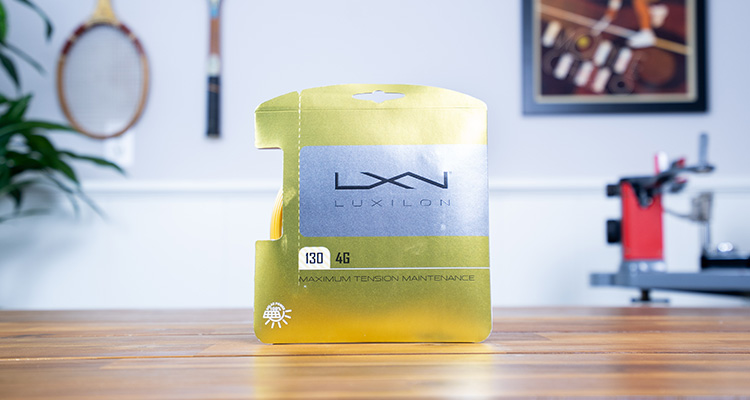
An Up-Close Look
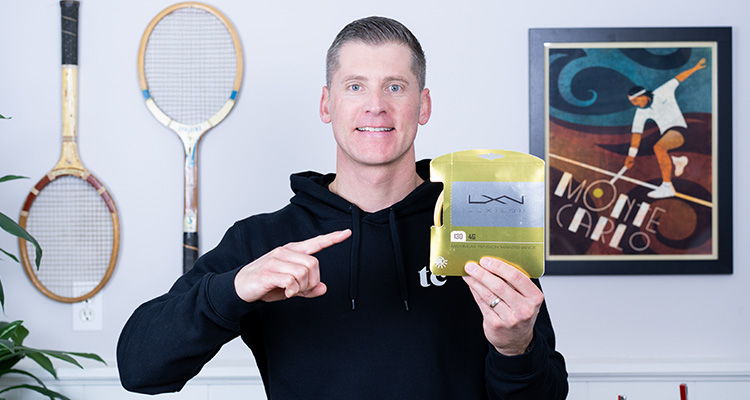
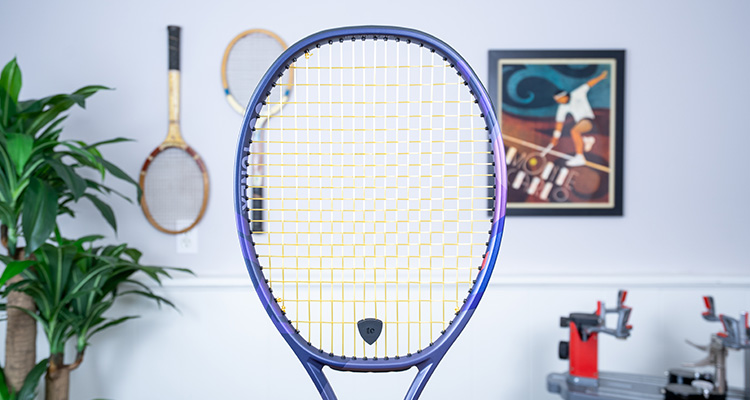
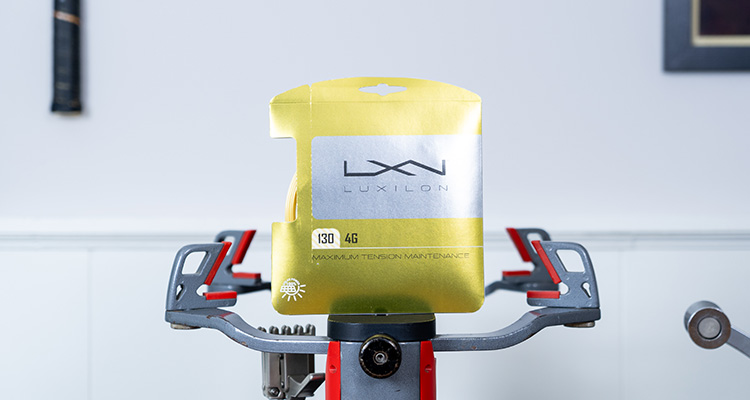
Below, you’ll find a close-up look at Luxilon 4G, including the packaging, the string out of the sleeve, and how it looks installed in a Yonex Percept 97D.
The goal is simple: give you a clear visual reference before we dive into performance. If you like to see the details up close, this should help ground the rest of the review in something tangible.
Test Summary
After several on-court sessions, Luxilon 4G delivered a performance that felt intentional from start to finish. It’s clearly designed around control and consistency, and that identity shows up across the board. There’s not much free power on offer, but when you commit to your swings, the string responds in a predictable, measured way.
What I appreciated most was how cohesive the hitting experience felt. The lower-powered profile, reliable spin, and directional accuracy worked together without anything feeling out of balance. I never felt like I had to manage the string or adjust to it mid-session. It performed the same way, point after point, which builds confidence.
Over time, that consistency held. Rather than fading quickly or becoming erratic, 4G tapered gradually, maintaining its character longer than many polys I’ve tested. That steadiness makes it easier to trust, especially in competitive settings where predictability matters.
Overall, 4G feels grounded and dependable. It doesn’t try to do too much, and that restraint is part of its appeal. I never felt like it was adding or subtracting from my game. It simply responded consistently and reliably, allowing me to swing freely and trust the outcome. If you value control, stability, and a reliable response, it makes a strong and convincing case.
| Pros | Cons |
| High-end control, predictable response | Limited free power |
| Excellent tension maintenance | Demanding for some players |
| Reliable spin performance | Premium price |
| Strong durability | |
| Forgiving for a poly |
Performance

For this review, I tested Luxilon 4G over multiple on-court sessions, evaluating its response across a range of hitting scenarios. From baseline rallies and competitive points to serves, returns, and net play, I paid close attention to how the string performed on every stroke. What follows is a closer look at how 4G held up.
| Attribute | Rating |
| Power | 6.3 |
| Spin | 8.7 |
| Control | 8.8 |
| Feel | 8.7 |
| Comfort | 7.7 |
| Durability | 8.6 |
| Playability | 8.6 |
| Movement | 9.2 |
| Overall | 8.3 |

Power: 6.3/10
Luxilon 4G sits firmly on the lower-powered side of the spectrum, and that’s intentional. Its more controlled response invites bigger cuts and faster swing speeds, which pair naturally with players who generate their own pace and spin. There’s no noticeable boost to pace or depth, but it also never felt woefully underpowered.
When I swung through the ball with confidence, the string responded predictably and rewarded full acceleration. I still felt capable of driving the ball through the court from the baseline, finishing points at net, and generating pace on serve, though it required a bit more effort to unlock that speed. It’s a power profile that favors commitment, measured and responsive rather than explosive or automatic.
Spin: 8.7/10
Spin was one of the more impressive aspects of Luxilon 4G. While I wouldn’t call it the outright leader in this category, it comfortably sits above average and delivers a highly consistent response off the ground. The string allowed me to swing aggressively with confidence, producing reliable shape and depth control.
What stood out most was how naturally the spin came when accelerating through contact. Rather than relying on a rough or textured profile to grab the ball, 4G generates rotation through a combination of lower power and dynamic snapback. The result was a heavy, predictable ball flight.
Just as important, it struck a strong balance between spin and usable pace. It produced meaningful rotation without feeling overly muted, unlike many other lower-powered polys. On more than a few occasions, balls I expected to sail long dipped back inside the baseline, reinforcing the sense of control and predictability that defines its overall character.

Control: 8.8/10
Control is one of Luxilon 4 G’s defining strengths. Its lower-powered profile plays a role, as does the spin it generates, but its consistent response ultimately defines the experience. Shot after shot, the string delivered a predictable launch and directional accuracy, making it easier to commit fully to targets and take calculated risks.
That consistency showed up most during extended baseline exchanges and when changing direction under pressure. Whether redirecting pace down the line or working the ball crosscourt with intent, the string responded in a stable, repeatable way. There were very few surprise launches or unpredictable flyers, which allowed me to swing freely without feeling like I had to hold back.
Across all areas of the court, 4G felt reliable. I was comfortable driving through tighter windows, carving sharper angles, and holding aggressive court positions because the string responded as I expected. Ultimately, that sense of trust is what defines strong control, and it’s where 4G quietly separates itself.
Feel: 8.7/10
For a firm polyester, Luxilon 4G delivers better feel than you might expect. The response is clean and connected without crossing into harsh or overly muted territory. There’s a clear sense of feedback on contact, but it never feels jarring.
That balance became most noticeable when taking pace off the ball. Whether softening my hands on a drop shot or absorbing speed at net, 4G allowed for touch and precision while maintaining its controlled character. Considering its firm reputation, the level of feel it provides stands out as one of the string’s more surprising aspects.

Comfort: 7.7/10
For a polyester, Luxilon 4G is surprisingly forgiving. That’s not to confuse it with the plush comfort of a multifilament or natural gut, but within its category, it holds up well. The firmness is noticeable, yet it doesn’t translate into a punishing or overly jarring response.
Across longer hitting sessions, the impact felt controlled rather than harsh. On clean contact, the stringbed delivered a stable, connected feel, and off-center shots didn’t produce the sharp shock that can sometimes accompany stiffer polys. The feedback was clear, but manageable.
As tension settled and hours accumulated, the feel stayed relatively consistent rather than abruptly stiffening. It still requires realistic expectations and proper restringing intervals, but within the polyester category, 4G strikes a balance between firmness and arm-friendliness.
Durability: 8.6/10
Durability is right in line with what you’d expect from a premium polyester. It doesn’t feel indestructible or dramatically different from other top polys, but it comfortably meets expectations for the type of string. In that sense, it meets expectations rather than redefining them.
I wouldn’t choose 4G solely for durability, but I also wouldn’t have any concerns about it holding up under normal play. Given its controlled, measured performance and overall strengths, the durability feels appropriate and well-balanced within the broader package.

Playability Duration: 8.6/10
Playability duration is one of Luxilon 4G’s standout traits. It holds tension well and maintains a consistent response longer than most polys I’ve tested. Where many polyester strings start to feel erratic or go dead after several sessions, 4G remained steady and predictable.
What stood out was how gradual the shift felt over time. Instead of a noticeable drop-off, the string’s performance tapered more evenly, making it easier to trust it deeper into its lifespan. That stability reinforces 4G’s core identity as a control-first string built on consistency.
That said, it’s still a polyester, and realistic expectations matter. Even with strong tension maintenance, performance declines eventually, and pushing it too long can introduce a firmer, harsher feel. To get the best results and protect your arm, it’s important to restring at a frequency that matches your playing volume and intensity.
String Movement: 9.2/10
String movement is excellent with Luxilon 4G. Even at higher swing speeds and during aggressive rallies, the strings consistently snapped back into place, helping maintain a stable, uniform stringbed, which plays a meaningful role in the string’s overall consistency.
For someone who’s a stickler for aligning my strings, there was very little need to straighten them between points. They tended to find their way back on their own, ready for the next ball. It’s a small detail, but one that reinforces 4G’s reliable, no-fuss performance.
Who Should Buy It
Luxilon 4G is best suited for players who generate their own pace and value precision over easy power. If you take full cuts at the ball, rely on spin for margin and control, and prefer a predictable response over added pop, this string aligns well with that style of play.
Intermediate to advanced players will get the most out of it, particularly those with developed mechanics and faster swing speeds. Competitors who value consistency from session to session should appreciate its strong tension stability and dependable playability duration.
Beginners or players still building strength and technique may find it demanding. Without confident mechanics and racquet head speed, it can feel underpowered and less forgiving, requiring more effort to produce depth and pace. For developing players, a more responsive or arm-friendly string may offer an easier path to confidence.
From a performance standpoint, 4G appeals to those who prioritize directional accuracy, reliable spin, and a stable stringbed that holds its shape under pressure. If you’re looking for a firm, control-first polyester with long-lasting consistency, 4G fits that profile well.
Tension
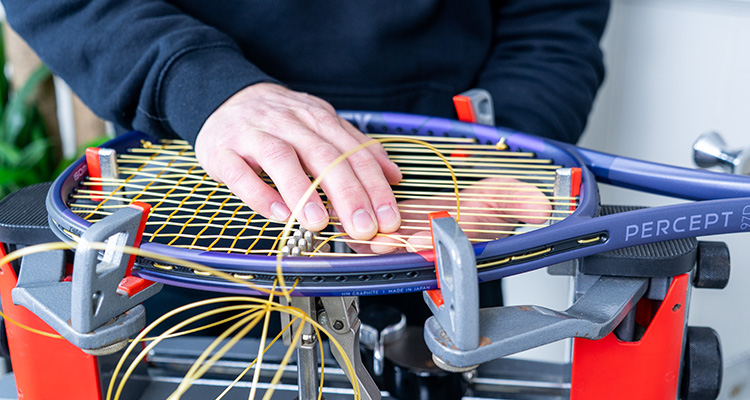
For my playtest, I strung Luxilon 4G at 52 lbs (23.6 kg) in the Yonex Percept 97D. That tension felt like a strong match for this frame and string combination. It delivered the control I was looking for without creeping too high, which helped preserve enough depth and comfort to keep the response balanced.
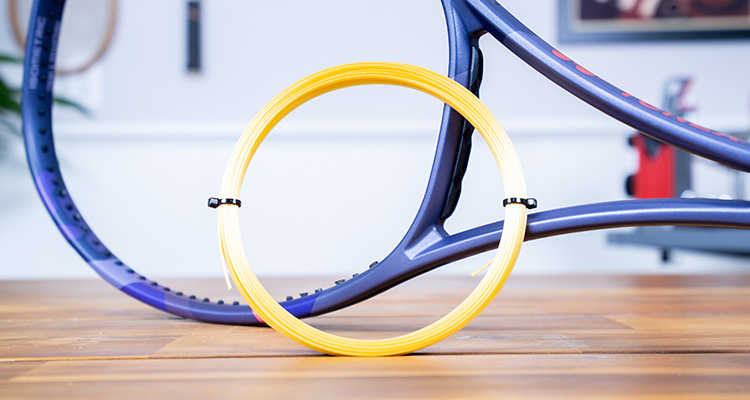
If you’re already playing with polyester, your current tension is a good starting reference point. 4G doesn’t require a dramatic adjustment. However, if you’re switching from a multifilament or synthetic gut, I’d recommend dropping your usual tension by 2–3 pounds (roughly 1 kg). That small adjustment can help retain some power while reducing the added firmness that comes with moving to a full poly setup. If you’re unsure where to begin, stringing at the midpoint of your racquet’s recommended tension range is a reliable and safe starting place.
4G also works well in a hybrid. In general, the mains will dominate the overall feel and performance. Stringing 4G in the mains allows you to retain most of its control, spin, and tension stability, while a softer cross can add comfort and liveliness. If you’re looking to soften the stringbed further, placing 4G in the crosses can still provide stability while allowing the mains to shape the feel more noticeably.
Composition
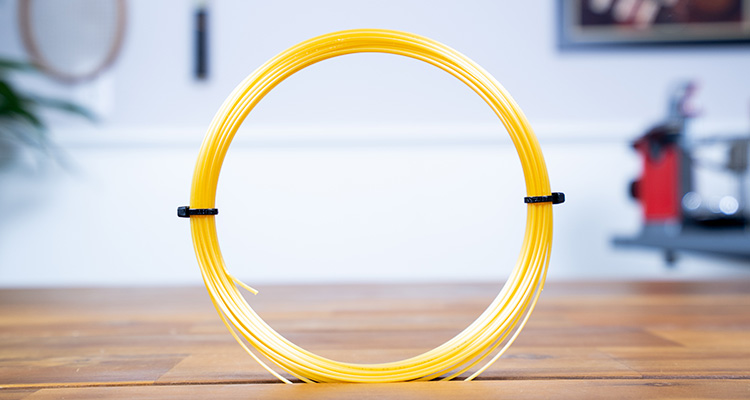
Luxilon 4G is a co-polyester monofilament built with an emphasis on tension stability and structural consistency. Luxilon engineered 4G to hold tension longer than traditional polyester strings. Its material blend focuses on durability and stability while maintaining enough flexibility to avoid feeling overly harsh.
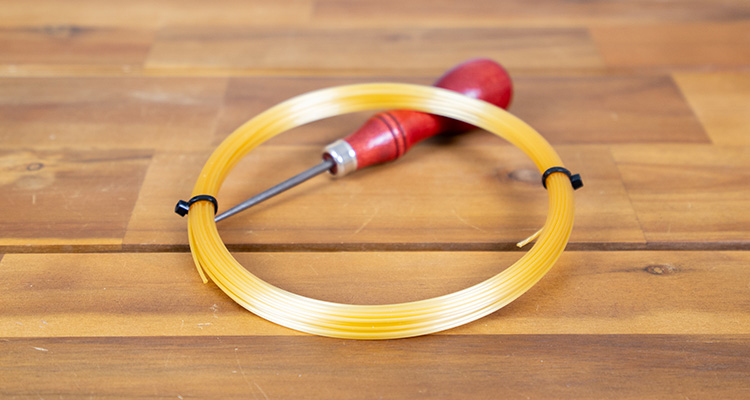
The string features a round profile, promoting consistent snapback and predictable ball response rather than relying on sharp edges or surface texture for spin. Gauge selection also influences performance: the thinner 1.25 mm option offers slightly more feel and spin, while the 1.30 mm gauge leans further into durability.
Overall, 4G’s construction reflects a clear design goal: maximize control and tension maintenance while preserving enough flexibility to avoid the overly harsh feel associated with earlier generations of polyester strings.
| Key Specs | Measurement |
| Length | 12.2 m / 40 ft |
| Gauge | 16 (1.30 mm) / 16L (1.25 mm) |
| Shape | Round |
| Composition | Co-poly |
| Reel Available | Yes (660 ft / 200 m) / (330 ft 100 m) |
| Available Colors | Gold |
| Country of Origin | Belgium |


Leave a Reply
Want to join the discussion?Feel free to contribute!